If you are looking at detached homes in Wedgewood Creek, one question usually comes up fast: what really drives value here? This northeast Oakville pocket can look consistent at first glance, but once you dig deeper, lot quality, renovation level, and location within the neighbourhood start to matter a great deal. If you want to understand how this market works before you buy, sell, or invest, this guide will help you read Wedgewood Creek more clearly. Let’s dive in.
Where Wedgewood Creek Fits in Oakville
Wedgewood Creek is often grouped with Iroquois Ridge North in neighbourhood data tools, which helps explain how the area is commonly understood in market reports and buyer searches. It is a northeast Oakville neighbourhood that began developing in the 1980s, with some newer construction added later.
That timeline matters because the area reflects a post-1980 suburban form. The Town of Oakville’s residential character study notes that this period brought larger home footprints and more floor area, which helps explain why many detached homes here feel spacious compared with some earlier neighbourhoods.
In practical terms, Wedgewood Creek tends to appeal to buyers who want a mature neighbourhood setting with established streetscapes, while still benefiting from housing stock that is newer than Oakville’s older central districts. It also offers strong access to major highways, trails, green space, and shopping around Eighth Line and Upper Middle Road.
What the Detached Housing Stock Looks Like
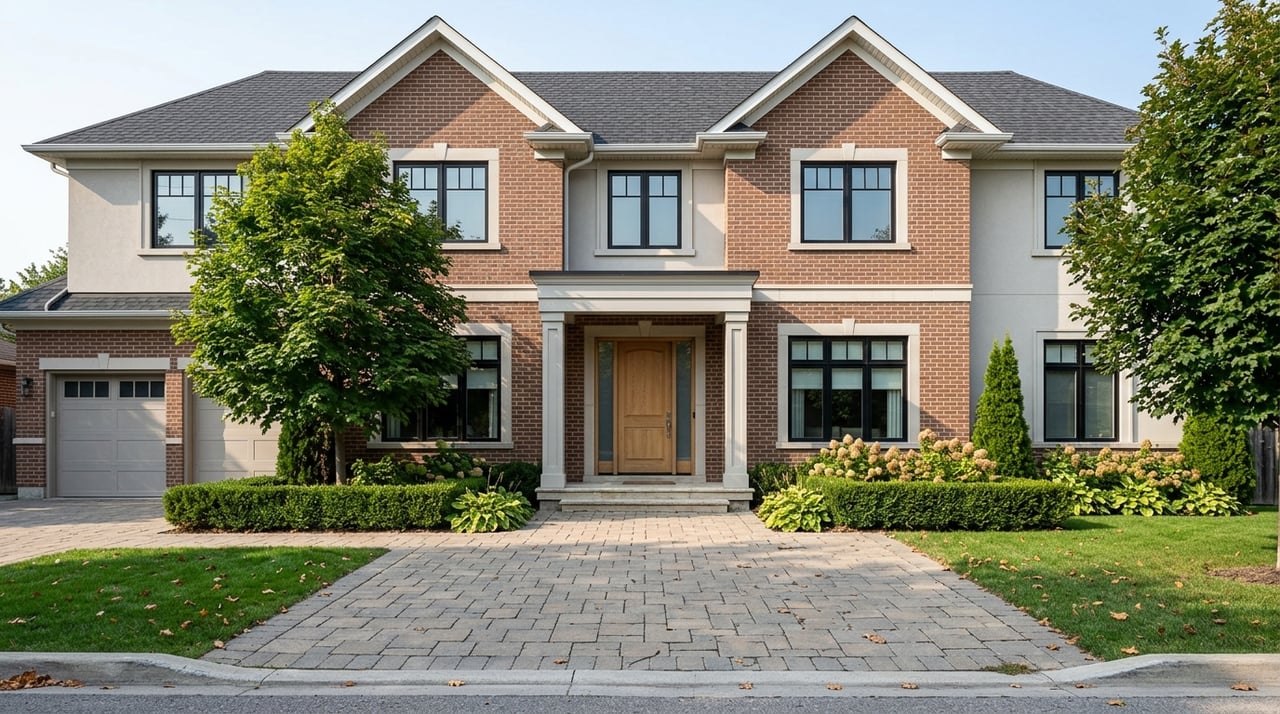
Most detached homes in Wedgewood Creek read as traditional suburban Oakville homes. You will commonly see two-storey brick houses, attached garages, and streets with curbs, sidewalks, and underground services.
The detached market appears to cluster around lots of roughly 50 by 110 feet, based on neighbourhood guides and recent listing examples. Some properties, especially ravine or premium lots, can be notably larger.
That said, it helps to think of 50 by 110 as a practical benchmark rather than a formal neighbourhood average. If you are comparing homes, the real story is often in the deviations from that benchmark, such as extra depth, greater width, more backyard privacy, or a more distinctive setting.
Are Most Detached Homes the Same Age?
No. While the neighbourhood started in the 1980s, the detached-home stock is not all from one narrow construction period.
Data associated with Iroquois Ridge North shows a broad mix of build years: 25% from 1981 to 1990, 19% from 1991 to 2000, 24% from 2001 to 2005, 21% from 2006 to 2010, and 6% from 2011 to 2016. That mix means buyers should expect variation in layout, finishes, and how updated a home feels.
This is important because build year alone will not tell you enough about a property’s market position. In Wedgewood Creek, an older home with thoughtful renovations and a strong lot can compete very well against a newer home with a less compelling setting.
What Buyer Demand Looks Like
The local profile points to a market that is more owner-driven than renter-driven. Data for the broader Iroquois Ridge North area shows 91% owner occupancy, 71% single-detached homes, and 68% of homes with four or more bedrooms.
That kind of housing mix tends to support move-up and long-term ownership patterns. It suggests a detached market shaped less by short-cycle turnover and more by households looking for space, functionality, and lasting value.
The area also has a strong family-household presence. HoodQ data shows 68% of households are families with children, and 32% report annual household income of $200,000 or more. For detached homes, that often translates into steady interest in properties that offer practical layouts, strong outdoor space, and room to grow.
What Drives Value in Wedgewood Creek
In this pocket, value appears to be driven less by simple age and more by the quality of the lot and the quality of the home’s updates. That is one of the most important points to understand if you are evaluating detached homes here.
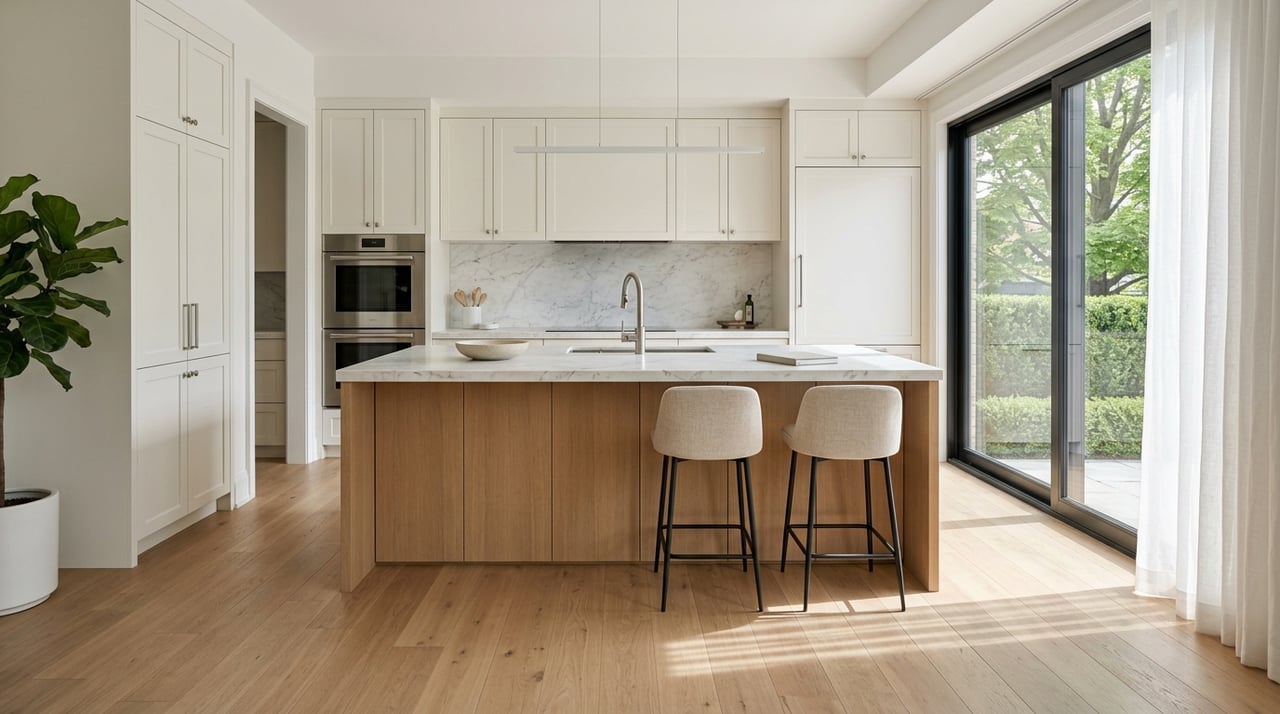
Recent listings highlight features such as ravine adjacency, park or catwalk exposure, deep backyards, renovated kitchens and bathrooms, and double garages. Some also emphasize large main floors and layouts that balance open-concept living with more defined rooms.
That tells you something useful about buyer priorities. In Wedgewood Creek, the market often rewards homes that offer privacy, usable family space, and a setting that feels better than average within the subdivision.
Lot Quality Matters More Than You Think
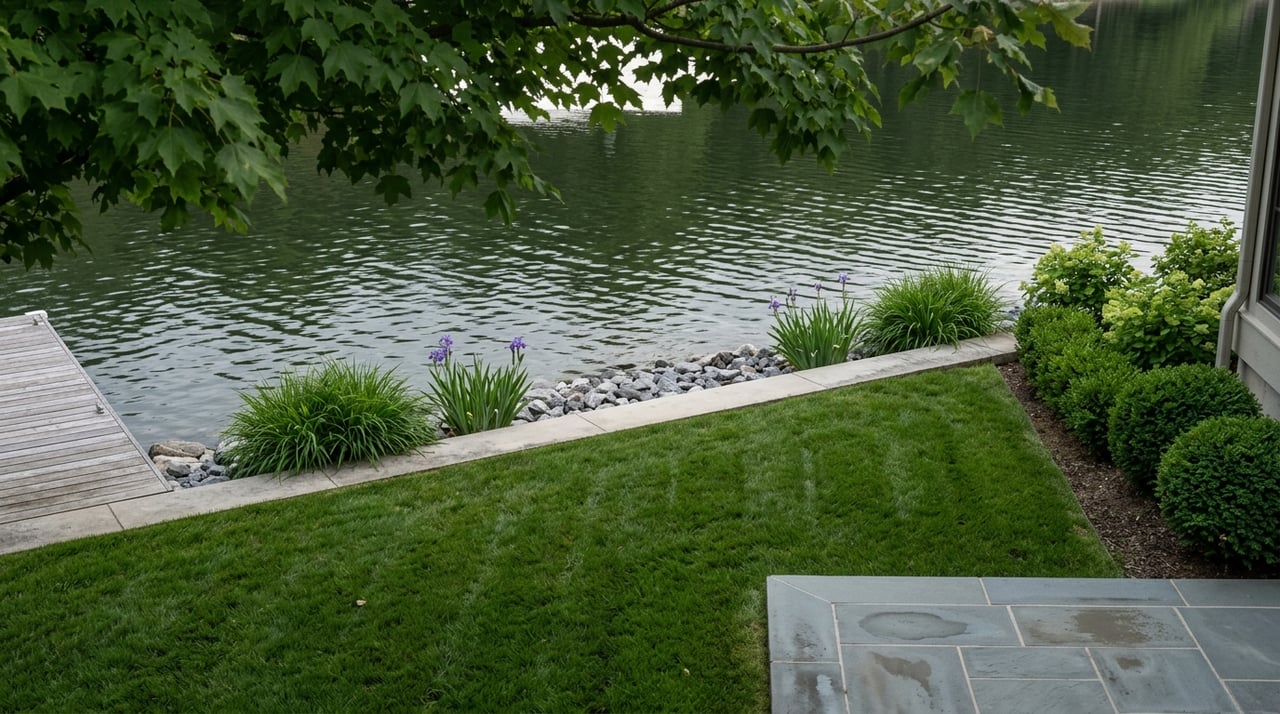
Not all detached lots trade the same way, even when the homes are similar in size. A deeper lot, wider frontage, ravine setting, or a backyard with more separation from neighbours can meaningfully improve market appeal.
If you are buying, it is worth studying the lot before you focus only on interior finishes. Kitchens and bathrooms can be updated over time, but lot position is much harder to change.
If you are selling, this is where precise positioning matters. A home on an oversized or better-sited lot should not be treated like a standard detached property just because the floor plan looks similar on paper.
Renovation Quality Carries Weight
Renovations also appear to play a major role in resale appeal. Updated kitchens, bathrooms, and main-floor layouts can help a home stand out, especially in a neighbourhood where original homes may span several decades of construction and varying levels of upkeep.
For buyers, that means looking beyond whether a home is “newer” or “older.” A well-executed renovation in a strong location may offer better long-term value than a less-updated home with a later build year.
For sellers, presentation and scope of improvements matter. Buyers in this segment are often comparing finish quality, functionality, and how much future work a home may require.
A Note on Flood Due Diligence
Creek-adjacent settings can add appeal, but they also deserve careful review. The Town of Oakville completed a Lower Morrison and Lower Wedgewood Creek flood mitigation study focused on riverine flooding in low-lying areas, and the broader prior prioritization study identified more than 40 flood-sensitive sites.
That does not mean the entire neighbourhood should be treated the same way. It does mean that if a property is near the creek or in a low-lying pocket, you should take extra care with drainage, grading, and available mapping during your due diligence.
This is one of those details that can be easy to overlook when a lot is especially attractive. In practice, careful property-level review matters more than broad assumptions about the whole neighbourhood.
How Wedgewood Creek Compares Nearby
Buyers often compare Wedgewood Creek with other Oakville neighbourhoods because the detached options can serve similar needs while offering a different feel. Understanding those distinctions can help you decide whether this pocket fits your goals.
Wedgewood Creek vs. Joshua Creek
Compared with Joshua Creek, Wedgewood Creek is generally the earlier-built and more mature option. Joshua Creek began developing in the mid-to-late 1990s and expanded further around 2004, with a wider mix of detached homes, townhomes, and condos.
If you prefer a more established subdivision feel, Wedgewood Creek may stand out. If you want a neighbourhood that reads newer overall and includes a broader housing mix, Joshua Creek may enter the conversation.
Wedgewood Creek vs. River Oaks
Compared with River Oaks, Wedgewood Creek appears more detached-focused and somewhat more consistent in its housing character. River Oaks was developed in the 1990s and early 2000s and includes a more mixed housing pattern, with some denser developments and narrower lots in certain areas.
For buyers focused specifically on detached homes, Wedgewood Creek may feel more straightforward to evaluate. The streetscape and housing type are generally more uniform from a detached-home perspective.
Wedgewood Creek vs. Glen Abbey
Wedgewood Creek and Glen Abbey share a similar post-1980 suburban era in broad terms, but they serve slightly different buyer preferences. Glen Abbey is a larger planned community with mostly single-detached two-storey homes, ravine lots, and pockets of townhomes and condo highrises.
Wedgewood Creek, by contrast, is a smaller northeast Oakville pocket with a more contained identity. Buyers often notice its mature-family subdivision feel and its practical commuter access.
What Buyers Should Watch Closely
If you are shopping for a detached home in Wedgewood Creek, it helps to compare homes through a local lens rather than relying on broad Oakville averages. The details that move value here are often very specific to the lot, layout, and degree of updating.
A focused review should include:
- lot width and depth
- backyard privacy and usable outdoor space
- ravine, park, or catwalk adjacency
- garage and driveway functionality
- renovation quality in kitchens and bathrooms
- main-floor flow and room proportions
- drainage and grading, especially near creek-adjacent pockets
The goal is to understand not just whether a home is attractive, but whether it is attractive for this neighbourhood. That distinction can help you avoid overpaying for cosmetic appeal or undervaluing a property with stronger fundamentals.
What Sellers Should Keep in Mind
If you own a detached home in Wedgewood Creek, your home’s market position may depend more on specific property attributes than on the neighbourhood label alone. Buyers are often willing to pay attention to premium lots, renovated interiors, and homes with a more refined balance of indoor and outdoor living.
That makes pricing and presentation especially important. A standard detached home and a detached home with an oversized lot, better privacy, or stronger upgrades may sit in very different competitive positions, even if they are only a few streets apart.
For sellers in this market, careful positioning can help surface the details that matter most. In a neighbourhood where many homes share a broadly similar style, the differences that create value need to be clearly identified and presented.
Why This Market Stays Relevant
Wedgewood Creek’s detached-home market remains compelling because it blends mature neighbourhood character with practical family-scale housing. It is owner-heavy, detached-heavy, and supported by features that many long-term buyers continue to value, including space, connectivity, and established streetscapes.
At the same time, it is not a one-note market. Variation in lot size, build period, and renovation quality means there can be meaningful differences from one detached home to the next.
That is why local interpretation matters. If you understand how to read the lots, the updates, and the micro-locations within the neighbourhood, you are much better positioned to make a smart buying or selling decision.
If you are considering a move in Oakville and want a more tailored read on Wedgewood Creek’s detached-home market, Niblock Real Estate can help you assess value with a neighbourhood-specific strategy.
FAQs
What is the typical lot size for detached homes in Wedgewood Creek?
- Many detached homes appear to be on lots around 50 by 110 feet, with some larger premium or ravine lots exceeding that size.
Are detached homes in Wedgewood Creek all built in the 1980s?
- No. The area began in the 1980s, but the housing mix also includes homes from the 1990s, 2000s, and early 2010s.
What affects detached-home value most in Wedgewood Creek?
- Lot quality, backyard privacy, renovation level, garage usability, and park or creek adjacency appear to matter more than build year alone.
How does Wedgewood Creek compare with River Oaks for detached homes?
- Wedgewood Creek appears more detached-focused and more consistent in housing character, while River Oaks has a broader mix of home types and some denser areas.
Should buyers worry about flood risk in all of Wedgewood Creek?
- No. The town’s flood mitigation study does not mean the entire neighbourhood carries the same concern, but creek-adjacent or low-lying pockets deserve extra due diligence on drainage, grading, and mapping.